Lightning season and your RV
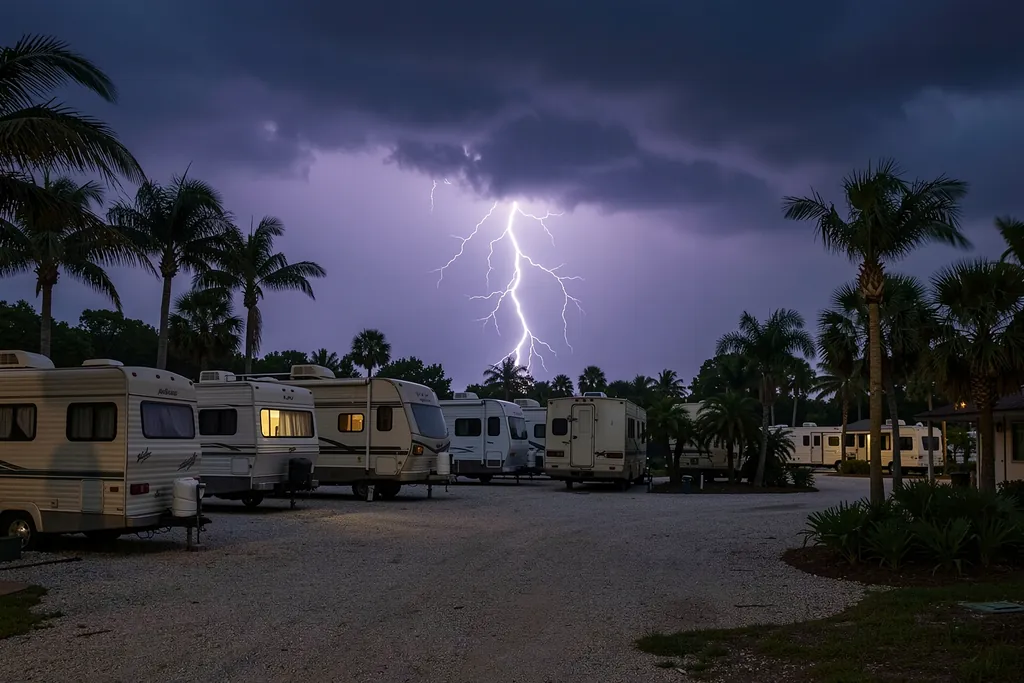
The stretch from Tampa Bay to Titusville is called Lightning Alley. Local station WKMG, citing lightning data, reports that about 90% of the strikes there land between May and October, from noon to midnight.
Techs work wherever the RV is parked: campground, storage yard or home.
Orlando in the numbers
A Vaisala analysis for the Orlando Sentinel ranked Orange and Seminole counties first and second in Florida for cloud-to-ground lightning per square mile over 2008–2017, at about 28.7 flashes each year.
In practice that means a strike near your campsite is a question of when. The steps below are about people first, then the RV.
Keeping people safe
- Where to shelterThe National Weather Service counts substantial buildings and hard-topped metal vehicles as safe. Environment Canada warns that fiberglass RVs and pop-up campers are not; an RV with a steel or aluminum body is acceptable.
- When to go inWhen you hear thunder, move to shelter, and stay there 30 minutes after the last rumble.
- Where to parkAvoid setting up under a lone tall tree, on a rise or beside a metal fence.
- Indoors, hands offOnce inside, stay off corded phones and anything plugged in — the Forest Service lists it among its lightning precautions.
Protecting the RV
- Unplug before the stormMike Sokol, who writes on RV electrical safety, says surge protectors and energy management systems do not protect from a direct strike. Disconnecting shore power is the only sure protection.
- Use a protector anywayFor nearby strikes and grid surges, a protector that also cuts off low and high voltage saves converters and air conditioners.
- Retract the awningGust fronts arrive minutes before the rain.
- Write down what quitAfter a close strike, note which appliances stopped and when. The tech and the insurer will both ask.
After a close strike
Look at the surge protector's display for an error code, smell for burnt electronics, and test the converter, AC, fridge board and microwave one by one.
If something is dead, note what and when, and send a request. Insurance claims for lightning go more smoothly with the tech's written findings.
Send your RV problem to a tech
A phone number is enough. A tech with time for the job calls you back.